
How Trade Values Actually Work
Blox Fruits values aren't set by the game — the community sets them. Here's how trading values, demand, and trends are really determined.
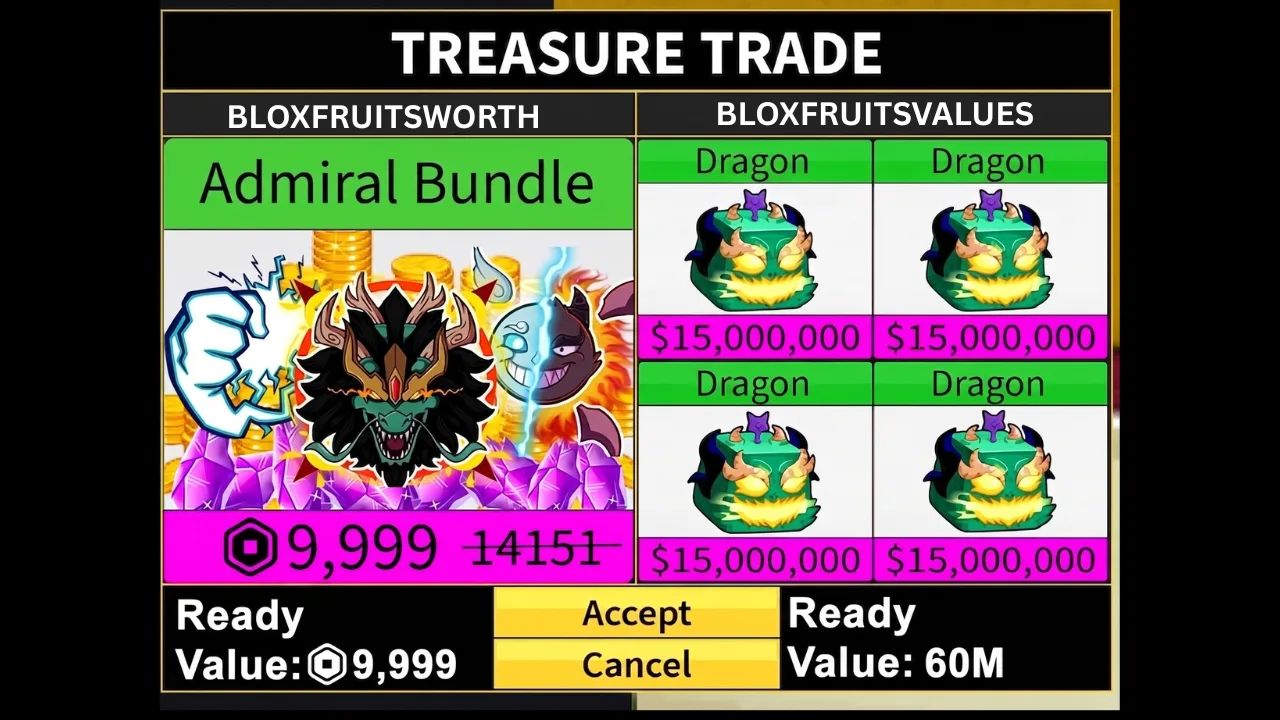
Every Blox Fruits player eventually asks the same question: how much is my fruit actually worth? Unlike a shop price, Blox Fruits trading values have no official number attached. The game never tells you what a Dragon or Kitsune 'should' trade for — the community decides, and those decisions change constantly.
On BloxFruitsWorth, we track those community-driven prices daily so you always know the current value of every physical fruit, permanent fruit, fruit skin, and gamepass before you hit accept.
Why values exist at all
Blox Fruits has hundreds of items and no official exchange rate. Instead, traders self-organize: rare fruits like West Dragon, East Dragon, and Kitsune are valued in the hundreds of millions or billions because demand massively outweighs supply. Common fruits like Rocket and Spin are worth almost nothing simply because everyone can find them.
Value is essentially a measure of scarcity multiplied by demand. A fruit that is both rare and useful — like Dough for raids or Kitsune for PvP — holds value far above its in-game Beli price.
Start hereNew to trading? Get up to speed with these quick beginner guides.
How demand sets the price
Demand is the single biggest driver of Blox Fruits value. When an update buffs a fruit or adds new content around it, demand spikes and so does the value. When a fruit gets nerfed, traders dump it and the value falls fast.
On our value list every fruit carries a demand score from 1 to 10 and a trend marker — Rising, Stable, or Falling — so you can spot movement before it's obvious.

Physical vs permanent values
A physical fruit is a one-time use item you find, buy, or trade. A permanent fruit unlocks the fruit forever on your account. Permanent fruits trade for dramatically more — often 50 to 100 times the physical value — because they never disappear.
When comparing offers, always check which side is permanent. A common new-trader mistake is accepting a physical fruit bundle that looks big in numbers but is worth far less than a single permanent fruit.
Where community values come from
Values are tracked from real trades across Discord communities, trading servers, and in-game trade chat. BloxFruitsWorth aggregates that data every day and publishes it as a free value list, with a WFL calculator you can use to check any trade in seconds.
The market moves fast — check the trending section and the latest guides to stay ahead of reworks, new fruits, and value spikes.
Fruits mentioned in this guide
Keep exploring
Ready to put this into practice? Compare live offers on the trading hub, line up a partner in Team Finder, or browse the full value list. New to trading? Start with What 'High Demand' Actually Means.
Frequently asked questions
No. The game sets a Beli shop price for physical fruits, but there is no official trade value. Every trading value you see is a community estimate based on real trades, which is why an up-to-date value list matters.
Values move with demand. If your fruit was recently nerfed, replaced, or made easier to obtain, its value falls. Check the trend marker on the value list — a Falling tag means traders are pricing it down right now.
Small movements happen daily, and big swings happen around updates. We refresh our value list every day so the numbers reflect the current market rather than last month's prices.
Sources & references
Every game mechanic and drop in this guide was checked against the official Blox Fruits Wiki and in-game data. Trading values are our own community-tracked estimates.